Plastic Credit Traceability
What this page covers
Plastic credit traceability
Plastic credits help fund the removal or proper management of an equivalent amount of plastic waste to balance a plastic footprint.
Traceability is important because it links each credit to real collection and management activity. In ZeLoop’s ecosystem, digital tools, structured data, and reporting support clearer visibility.
In brief
- Plastic credits represent the removal or proper management of an equivalent amount of plastic waste.
- Traceability shows how a credit connects to collection, recycling, and reported impact over time.
- ZeLoop refers to structured data, KPIs, and digital systems that support clearer tracking and transparency.
What to do
Plastic credits are presented as a practical way to address plastic use by funding projects that remove or properly manage waste. This can support action across different environments, including land, rivers, and marine areas.
Traceability strengthens that model by making credit-related activity easier to follow and explain. For businesses, this supports more credible communication around plastic neutrality, plastic-positive action, and ESG reporting.
Within ZeLoop’s operating model, the program is described through defined KPIs, regular coordination, and platform architecture supported by automation. Together, these elements point to a more structured way to monitor activity and report progress.
What to keep in mind
The available information supports the role of plastic credits and structured tracking, but it gives only limited direct detail about the exact traceability workflow on this page. It is safest to understand traceability here as transparent monitoring rather than a fully documented chain of custody.
ZeLoop’s materials do describe measurable management practices, including KPIs such as active users, B2B leads, and NFT credits sold, as well as weekly syncs during the initial phase. This indicates an emphasis on organised reporting and operational follow-through.
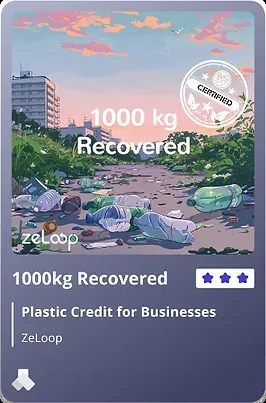
Some program terms are also stated clearly. One document notes that purchases starting from 1000 dollars are linked to a Green Entrepreneur NFT, with 10 percent of proceeds allocated each quarter to eligible holders in proportion to contribution, while 90 percent goes to the main program.